Showing posts with label Food. Show all posts

May 09, 2016

Third week's sum up

Good evening everybody! We have just ended the third week of our blog that was on the subject of FOOD. Here you have the collection of what has been posted during the whole week:


1. A recipe for good writing :)

Here you will find tips on how to teach writing ... by writing something as ordinary as a recipe!;)


2. Learning vocabulary - a tough nut to crack?


Vocab? Tough to crack? Nah..! Not with us!


May 08, 2016

Food-related speaking games and activities

As an extremely talkative person, I am also a teacher who provides a great deal of space for speaking activities. And don't worry - it doesn't mean that I talk all the time :) I just make sure that every learner has plenty of possibilities to develop speaking skills. 
What is more, as I mentioned in one of the posts - any opportunity to practice speaking cannot be wasted! Thus, every subject introduced to the class can serve as a base for further speaking tasks. 

One may ask: how is it possible? How long can you talk about food?? Basing on my own teaching experience, I can guarantee that it is possible to create various questions using only a few words. Working with the use of direct method has taught me that every word can be a basis for both easy and complicated questions for learners of all levels. For instance a simple word 'apple' can generate the following questions:
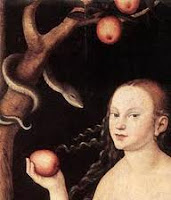

http://thaom.blogspot.com/2012/11/apple-znowu-pozywa.htm
What is this? [pointing at the apple or at its picture] 
What colour is the apple?
Is the apple red or green?
What colour can the apple have?
Do you like apples?
Does your mum/dad/etc. like apples?
What can you make from apples?
Is an apple a fruit or a vegetable?
Can you imagine not eating apples?
Do you remember what happened with the apple in the Bible?
How can you interpret the picture on the right?
What does an apple symbolize?
Do you have Adam's apple? Can you show it?
What does it mean to be the apple of sb's eye?

May 07, 2016

Organic or non-organic food? Reading comprehension

Do you like eating? I think that everybody does:)

Our eating habits may differ and I don't mean only the fact that some of us are vegetarians or vegans but rather the products we choose. Some people try to buy mainly things that are grown in a country they live, the others prefer those with low prices but there are also people who would do completely the oppoosite - they choose very expensive, organic food because they hope that the more they pay, the better their meal is.

What kind of consumer are you?

Organic food is my choice for today's reading comprehension:)

The text for reading comprehension you can find here:


May 06, 2016

Listening exercises

You are going to listen to 3 recordings. One is about making a pie, one about ordering meals at a restaurant and the last one about deciding what to have for breakfast. Enjoy!

Listening 1 Making a pie

I. Fill in the gaps and answer the questions.

1. The first thing to do is to .................. onion and .......................
2. How should it be chopped? ..........................................................
3. Put the onion and the garlic into .................................................
4. What should be added to it?
5. What kind of meat do we need?
6. What should we do with it while cooking?
7. How much water should we add?
8. What should we do with it for 15-20 minute?
9. 20 minute should be enough for the meat to be nice and soft and ...............................
10. What should we do with potato?
11. We should ....................... the potato with a ..................... of milk

May 05, 2016

Food idioms - a piece of cake!

Idioms, idioms, idioms… Most of the time they are so weird looking and sounding that it’s almost impossible to remember what they mean. Take for instance the titular ‘a piece of cake’. I mean, really? How to combine the meaning with the form in a reasonable way? It’s challenging indeed, but you have to agree here that it sounds extremely sophisticated when an idiomatic expression is popped up every now and then in a conversation. Let’s show our students then that amusing visual aids may help a bit in memorizing idioms!

Following is the table with idiomatic expressions as well as three exercises practising their usage in context!


May 04, 2016

Learning vocabulary - a tough nut to crack?

How to learn a long meaningless vocabulary list? By writing words and their translations in two columns? No way! Is learning of vocabulary easy, boring or challenging? If it is so, let's make it exciting! Have a look at some ideas for a lesson that may appeal to different types of learners.

First let them involve in small competition to motivate them and make the lesson more enjoyable. Then create opportunities to learn for kinaesthetic students (let them show the meaning with gestures or "bring" the objects they bought), visual learners (ask them to draw pictures and visualize objects in the room), auditory learners (ask them to follow oral instructions) and analytical learners (ask them to put the words in different categories).

Warm-up

Task 1 (analytical learners, group work activity)

Divide students in 4 groups and give them 5 minutes to write down as many food items as they know (ask them to write them in alphabetical order) in the categories provided below. Award the group with the most words with pluses or points and let them choose their opponents for the second round (see Task 3). After you check your vocabulary lists together you may like to extend it using:


May 03, 2016

A recipe for good writing :)

Writing doesn’t have to be associated with something unpleasant and difficult. Students can practice writing even in the simplest way which is recipe. Each of us, no matter we are students, teachers, parents or children has written or will write a recipe. They may be written for your own needs, blog, recipe books or for your friends. That’s why it’s good to know some rules necessary to create a clear and well-organized recipe.

Top Tips for writing recipe:
Put the title first – name of a dish (the shorter the better to remember :) )
Don’t forget about two main parts of a recipe: INGREDIENT LIST and METHOD.

INGREDIENT LIST
METHOD
While listing ingredients, use the numbers or dashes.
Describe each step carefully, briefly and clearly.

May 01, 2016

Week No. 3


Hi there everyone!

Still haven’t got enough of us? We are about to begin a new week, which, of course, means a new topic and new ideas on day-to-day basis! What’s the subject for this incoming week, you may ask, and I am glad to answer that it’s going to be FOOD!:)

We are going to present a variety of exercises that you will be able to employ during your EFL classes.